
Wire Concealment & Cable Management
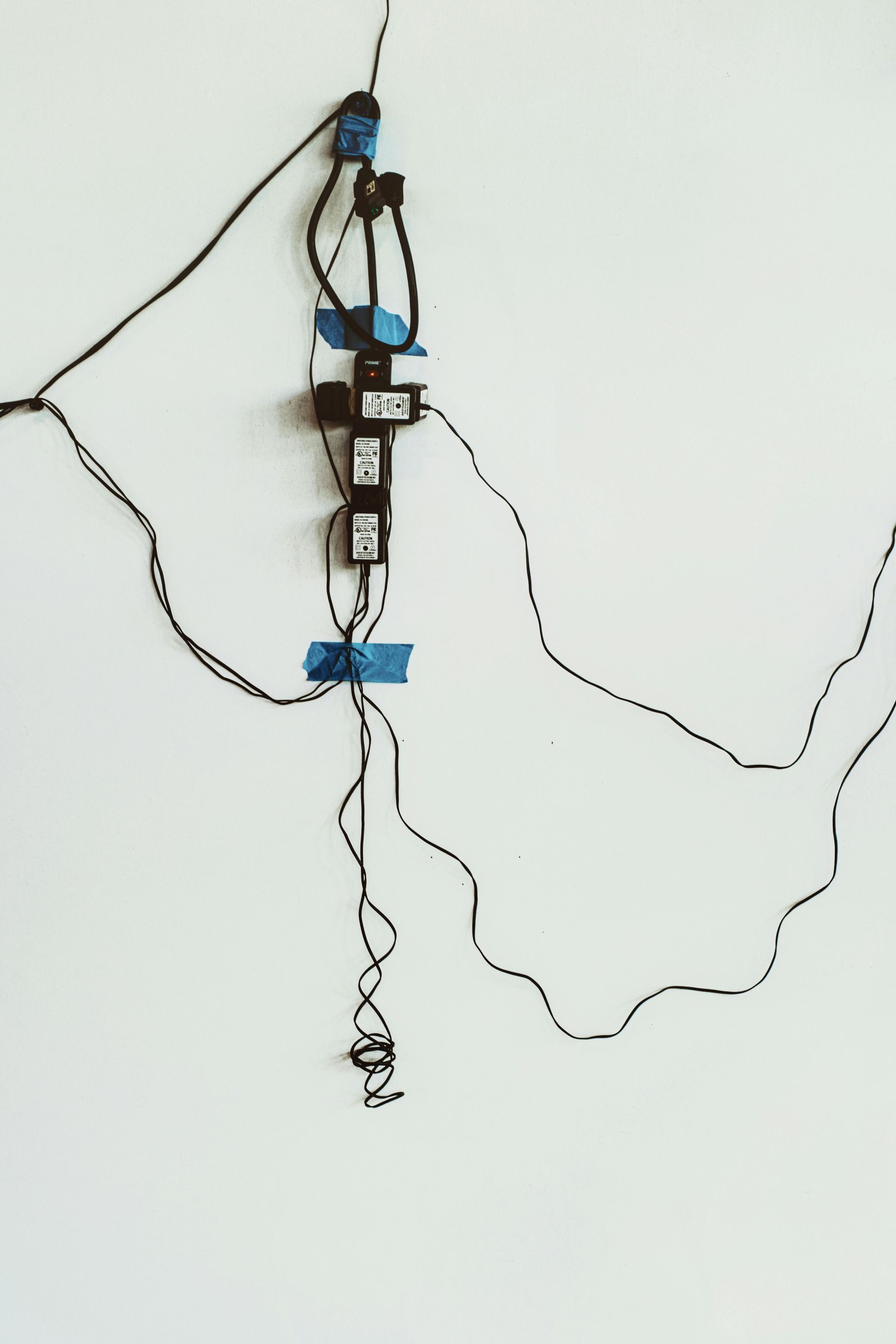
Eliminate the Tangle Below Your Mounted Screen
Wire Concealment & Cable Management in Spartanburg for installations where exposed cables compromise the clean appearance of a wall-mounted display
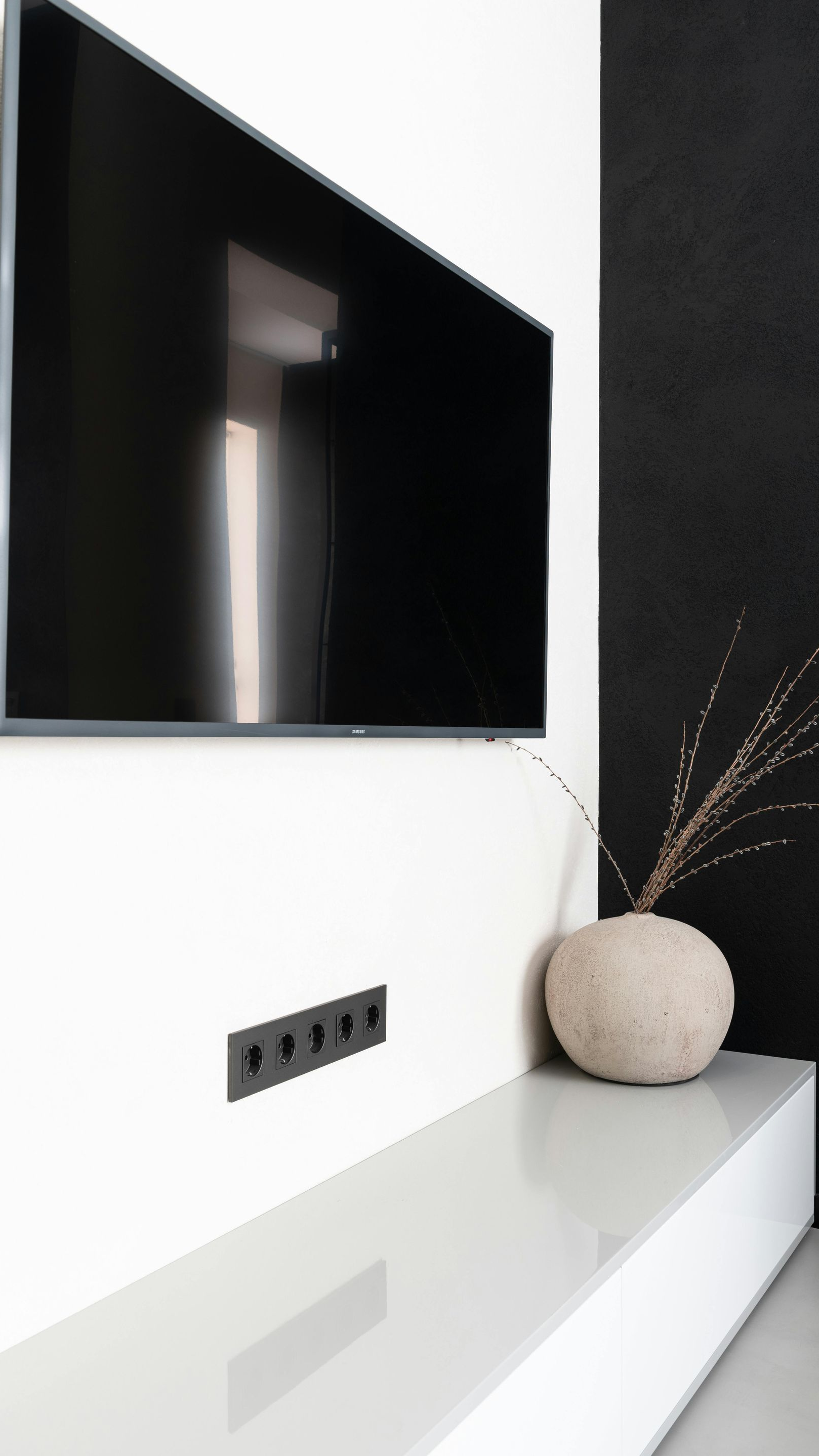
Clean Seam Finish, LLC handles wire concealment and cable management in Spartanburg for homeowners who want their television installation to look finished, with no visible cords running down the wall or pooling on the floor. You've invested in a clean mount, but the effect is undone by a bundle of HDMI, power, and audio cables draped across the drywall or looped behind furniture. This service routes those connections inside the wall cavity or within surface-mounted channels that blend with your trim, leaving the area below the screen clear and organized.
The approach depends on whether your wall allows in-wall fishing and whether local code permits running power cables through the cavity. When conditions allow, the installer cuts a small access hole behind the television and another near the baseboard, then fishes low-voltage cables—HDMI, optical audio, Ethernet—through the space between studs. Power cords are routed through a recessed kit that includes code-compliant in-wall outlets, or they remain external and are tucked into a paintable raceway that runs vertically from the mount to the floor. All connections are tested after the covers are installed to confirm signal integrity and proper seating.
Contact the team to review your wall construction and cable types before scheduling wire concealment in Spartanburg.
In-Wall Routing and Surface Channel Options
You'll see the installer use a stud finder and flexible drill bit to create a pathway between the upper and lower access points, threading cables through the cavity with a fish tape or glow rod. Low-voltage wires are bundled separately from power lines to reduce interference, and any sharp bends are avoided to prevent signal degradation on HDMI runs longer than fifteen feet. If your wall contains horizontal fire blocking between studs, the installer will either drill through the block or reroute the cables along an alternate path that exits closer to the floor.
After the cables are pulled and connected, you'll have a smooth wall with only two small cover plates—one behind the screen and one near your media console—marking the entry and exit points. Clean Seam Finish, LLC installs brush-style plates that allow you to add or remove cables in the future without cutting new holes. When in-wall routing isn't feasible due to insulation, plaster, or brick, a low-profile channel is mounted on the surface and painted to match your wall color, keeping cords organized and protected without the need for demolition.
Cable length is measured to account for the distance between components and the television, with a small service loop left inside the wall or channel to accommodate future adjustments. Ethernet and coaxial lines are included in the same run when streaming devices or cable boxes require wired connections. The system is not designed to carry speaker wire for rear surround channels unless a separate conduit is added, and any cable rated for outdoor or plenum use is swapped for standard indoor-rated wire to meet residential code.
Wire Management Questions Homeowners Ask
People in Spartanburg often want to know how cables are hidden, whether power cords can go inside the wall, and what happens when wire runs encounter obstacles.
What's the difference between in-wall and surface-mounted cable management?
In-wall routing hides cables completely inside the wall cavity using recessed plates, while surface channels attach to the wall exterior and can be painted to blend with the finish.
Why can't standard power cords be fished through the wall like HDMI cables?
Building code requires power cables inside walls to be rated for in-wall use and connected to proper junction boxes, so a recessed power kit with built-in outlets is installed instead of running a standard plug through the cavity.
How do you route cables when insulation or fire blocking is present?
he installer either drills through horizontal blocks using a flexible bit or reroutes the cables along the wall surface using a paintable raceway that minimizes visual clutter.
What happens if I need to add a new device or cable later?
Brush plates at the entry and exit points allow you to thread additional cables through the same pathway without cutting new access holes or removing the covers.
Can you conceal cables on a brick or concrete wall?
Surface-mounted channels are used on masonry walls since in-wall fishing isn't possible, and the channel is secured with adhesive backing or masonry screws depending on the surface texture.
Clean Seam Finish, LLC evaluates your wall type, cable count, and component locations to determine the best concealment method, then completes the installation with covers that maintain a clean, organized appearance. Reach out to confirm your setup details and schedule the wire management service.