
Ceiling Fan With Light Installation
Combined Lighting and Airflow from Single Fixtures
Ceiling Fan With Light Installation in Spartanburg for rooms requiring both illumination and consistent air circulation
When existing ceiling fixtures provide only lighting or only airflow, rooms often require additional installations that complicate wiring and consume ceiling space. Ceiling fans with integrated lighting systems address both functions through a single junction box connection, simplifying the electrical layout while providing adjustable light levels and fan speeds. Clean Seam Finish, LLC installs these combination fixtures throughout Spartanburg, ensuring that wiring supports both circuits independently and that switch configurations allow separate control of lighting and fan operation.
The installation process involves verifying that the existing electrical box is fan-rated and positioned to support the combined weight of the fixture, motor, and light assembly. Many older ceiling boxes were installed for lightweight fixtures and require replacement with braced units before a fan can be safely mounted. The wiring must include separate conductors for the light kit and fan motor, allowing independent switching that most homeowners prefer over single-switch operation that ties both functions together.
Arrange a consultation to evaluate your current ceiling fixture and electrical configuration.
How Integrated Light Kits Function with Fan Motors
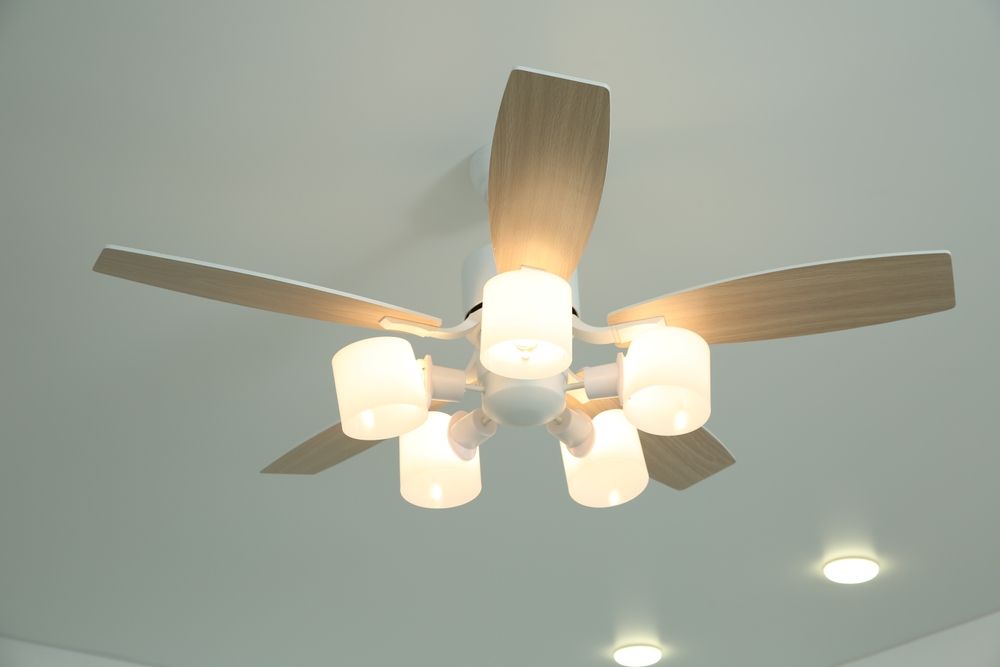
Ceiling fans with integrated lighting use a central power supply that splits into separate circuits for the motor and light assembly, each controlled independently through dedicated switches or remote systems. The light kit attaches below the motor housing, positioning bulbs or LED arrays to direct illumination downward while blade rotation occurs above the light plane. This configuration prevents shadows from rotating blades and ensures even light distribution across the room.
After installation completes, you control fan speed and lighting intensity separately, adjusting airflow during temperature changes without affecting room brightness. The fixture eliminates the visual clutter of separate ceiling lights and fans, creating a cleaner ceiling line while maintaining full functionality of both systems. Rooms feel more balanced in temperature as air circulates continuously, and you adjust lighting to match activities without needing multiple overhead fixtures.
Switch configuration varies based on existing wiring, with options including dual wall switches, pull chains, or remote-control systems that eliminate the need for additional wall modifications. The installation includes balancing the fan blades and verifying that the light kit is secured properly to prevent rattling during operation, since vibration from an unbalanced fan can loosen light assembly connections over time.
Common Questions About This Service
Understanding how combination fan and light fixtures operate helps homeowners evaluate whether this installation suits their room layout and functional needs.
What wiring differences exist between fan-only and fan-with-light installations?
Fan-with-light installations require an additional conductor to supply power separately to the light kit, allowing independent control of lighting and fan speed rather than forcing both to operate simultaneously.
How does blade rotation affect light distribution in a room?
Properly installed light kits direct illumination downward from below the blade plane, preventing rotating shadows and ensuring consistent light coverage regardless of fan speed or blade position.
What ceiling heights work best for combination fixtures?
Standard eight-foot ceilings benefit from low-profile or flush-mount designs that minimize the distance between ceiling and blade plane, while higher ceilings accommodate downrod-mounted units that position the fan within the optimal airflow zone.
When should existing ceiling boxes be replaced during installation?
Any ceiling box not rated for fan support or lacking proper bracing requires replacement before installation, since the combined weight and rotational force of fan and light assemblies exceed the capacity of standard fixture boxes.
What light bulb types work best in ceiling fan fixtures?
LED bulbs generate less heat than incandescent options and tolerate the vibration from fan operation without premature failure, making them the preferred choice for combination fixtures used frequently in Spartanburg homes.
Clean Seam Finish, LLC ensures that your ceiling fan and light installation meets electrical code requirements and operates smoothly across all speed and brightness settings. Contact us to schedule a fixture evaluation and discuss switch configuration options for your specific room.