
Full-Motion & Articulating Mounts
Adjust Your Screen Position Without Repositioning Furniture
Full-Motion & Articulating Mounts in Spartanburg for rooms where seating arrangements shift and fixed viewing angles create persistent glare
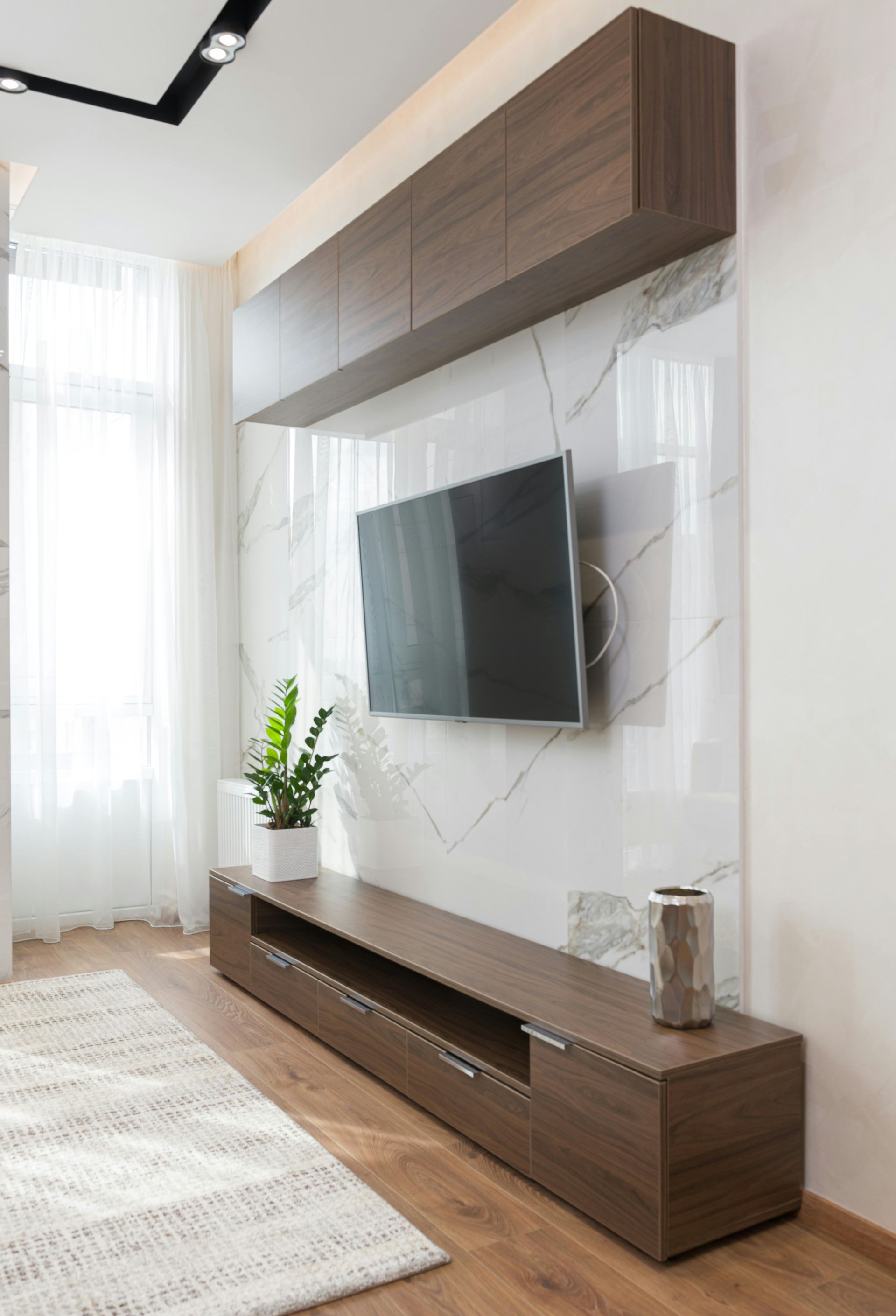
Clean Seam Finish, LLC installs full-motion and articulating mounts in Spartanburg for homeowners who need the flexibility to swivel, tilt, or extend their television away from the wall when seating zones change or sunlight washes out the display. You're working with a living room, den, or bedroom where one fixed angle never serves every use case—whether you're hosting a group on the sectional, cooking in an open kitchen with sightlines to the screen, or adjusting for afternoon glare from a west-facing window. The mount provides smooth, tool-free repositioning while maintaining a secure hold on screens up to seventy-five inches or more, depending on the bracket's load rating.
Installation begins with locating studs across the span required by the bracket's mounting plate, which is often wider than a fixed mount to support the cantilever load when the arm is fully extended. Lag bolts are driven through the plate into solid framing, and the articulating arm is attached with locking pins that allow rotation and tilt without play or wobble. Cable length is calculated to accommodate the farthest extension point, preventing tension on HDMI or power cords when the screen is pulled forward or swung to the side.
Schedule a consultation to review your room layout, screen size, and typical viewing positions before the mount is selected and installed in Spartanburg.
Multi-Axis Movement and Load Distribution
You'll use the arm to pull the screen eight to sixteen inches away from the wall, then swivel it left or right by forty-five degrees or more, depending on the bracket model. The tilt function lets you angle the top of the display forward or backward to counter reflections or adjust for elevated mounting positions. Each joint in the arm includes a tension collar or friction washer that you can adjust to control how much force is needed to reposition the screen, preventing accidental shifts while allowing easy movement when you grip the frame.
After the television is mounted and the arm is tested through its full range of motion, you'll see the screen retract flush against the wall when not in use and extend smoothly without sagging or drifting. Clean Seam Finish, LLC verifies that all pivot points lock securely and that cable slack is managed with a channel or velcro straps along the arm, so wires don't snag when the display is repositioned. The final setup includes a demonstration of the tilt and swivel limits, plus guidance on tightening the friction settings if the arm feels too loose after repeated adjustments.
Weight capacity is matched to your television's actual mass plus a safety margin, and the bracket plate is sized to span at least two studs even when the screen is smaller than fifty inches. If your wall is drywall over metal studs, toggle bolts or specialized anchors are used, though wood framing is always preferred for articulating mounts due to the leverage forces created when the arm is extended. The mount is not recommended for plaster-over-lath walls unless blocking is added behind the surface.
Answering Your Articulating Mount Questions
Residents in Spartanburg frequently ask about movement range, cable management, and the wall reinforcement needed for heavier screens on extension arms.
How far can the mount extend from the wall?
Most full-motion brackets extend twelve to eighteen inches at full reach, though low-profile models may offer six to eight inches, and commercial-grade arms can extend beyond twenty-four inches for very large displays.
What prevents the screen from drifting downward when the arm is extended?
Tension adjustments at each joint allow you to increase friction so the screen holds its position under its own weight, and some mounts include gas-spring assists that counterbalance heavier panels.
How do you keep cables from tangling or pulling loose during movement?
Wires are routed through a flexible conduit or secured along the arm with cable clips, and sufficient slack is left at the connection points to accommodate the full extension and swivel range without strain.
Why is stud placement critical for articulating mounts?
The extended arm creates a cantilever load that multiplies the effective weight of the television, so the bracket plate must be anchored across multiple studs to distribute the force and prevent the mount from pulling away from the wall.
Can the mount be installed on an angled or corner wall?
Articulating brackets work on angled walls if the mounting plate remains vertical and the arm's swivel range is adjusted to avoid interference with adjacent surfaces or furniture when the screen is repositioned.
Clean Seam Finish, LLC matches the bracket to your screen size, wall type, and movement requirements, then installs it with hardware rated for the load and extension distance. Contact the team to confirm stud locations and cable run details before scheduling the installation.