
Remote-Control Ceiling Fan Installation
Wireless Control Without Additional Wall Switches
Remote-Control Ceiling Fan Installation in Spartanburg for rooms where adding wall switches involves extensive wiring modifications
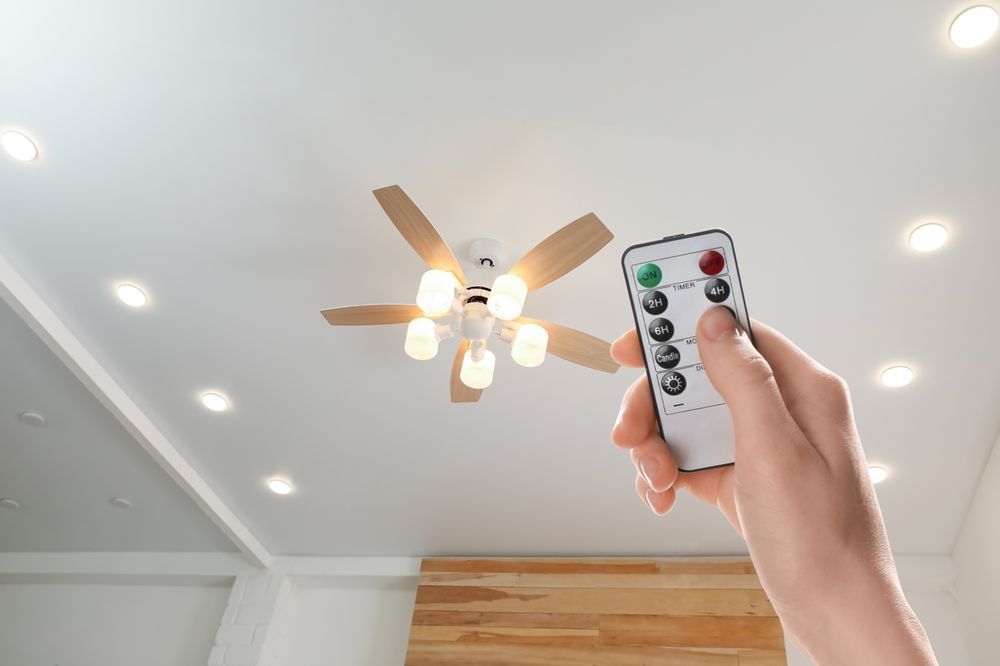
Many rooms have single-switch electrical configurations that control only one function, making it impossible to independently adjust ceiling fan speed and lighting without installing additional switches that require cutting into walls and running new wiring. Remote-control ceiling fans eliminate this limitation by using wireless receivers installed inside the fan housing that respond to handheld transmitters, allowing full control of fan speed and light settings without any wall switch modifications. Clean Seam Finish, LLC installs remote-control ceiling fans throughout Spartanburg, configuring receivers and remotes to provide reliable operation while maintaining the option for basic on-off control through existing wall switches.
The receiver module connects between the incoming power supply and the fan's motor and light circuits, interpreting radio frequency signals from the remote to adjust speed and brightness. Installation includes programming the remote to communicate with the receiver, testing all speed settings and light functions, and mounting wall brackets for remote storage so the control unit remains accessible rather than getting misplaced.
Arrange a consultation to assess your current switch configuration and discuss remote-control options for your ceiling fan installation.
What Changes After Remote Installation Completes
Remote-control systems use radio frequency signals that pass through walls and furniture, allowing fan adjustments from anywhere in the room without line-of-sight requirements. The receiver inside the fan housing decodes these signals and switches fan motor speed or adjusts light output accordingly, responding within a fraction of a second to provide the same immediacy as a wall switch. Most systems include multiple speed settings and dimming capability for integrated lights, giving you finer control than typical wall switches provide.
Once operational, you adjust fan speed and lighting from your chair, bed, or anywhere in the room without walking to a wall switch, which proves particularly useful in bedrooms and living spaces where comfort and convenience matter most. The remote also allows fine-tuning of light brightness to match activities or time of day, rather than accepting the fixed output of a standard light switch. Existing wall switches remain functional for basic power control, allowing you to completely shut off the fan when needed while the remote handles all speed and light adjustments during normal operation.
The installation includes setting up the remote's code to prevent interference with neighboring fans or devices, since multiple remote-controlled fans in close proximity can experience cross-talk if not properly configured. Battery replacement for the remote transmitter is the only ongoing maintenance requirement beyond standard fan care, with most remotes operating for several years on a single battery.
Common Questions About This Service
Remote-control ceiling fan installations prompt questions about reliability, compatibility with existing wiring, and the differences between remote systems and traditional switch controls.
What existing wiring is required for remote-control fan installation?
Remote-control fans require only the basic power supply that feeds a standard ceiling fixture, since the receiver handles all switching functions internally without needing separate conductors for fan and light circuits.
How do remote controls avoid interference with other wireless devices?
Modern ceiling fan remotes use specific radio frequencies and coding systems that pair the transmitter with a single receiver, preventing commands from affecting other fans or being disrupted by household wireless devices in Spartanburg homes with multiple smart systems.
What happens if the remote is lost or stops working?
Most remote-control fans retain basic functionality through the wall switch, allowing you to turn the fan on and off even without the remote, and replacement remotes can be programmed to work with existing receivers if the original is lost.
When is remote control preferable to installing additional wall switches?
Remote control makes sense when adding wall switches would require cutting into finished walls and running new wiring, or when room layout makes wall switch locations inconvenient compared to the flexibility of wireless control from anywhere in the space.
What range do ceiling fan remotes provide?
Most ceiling fan remotes operate reliably within a range of 20 to 30 feet, covering typical room dimensions and allowing control from adjacent spaces, though walls and metal structures can reduce effective range in some installations.
Clean Seam Finish, LLC completes the installation and receiver configuration, demonstrating all remote functions and ensuring reliable operation across the full range of speed and light settings. Reach out to discuss remote-control options for your ceiling fan project and to schedule an installation at your Spartanburg property.